Jaw pain can make simple everyday activities like eating, talking and yawning uncomfortable. You may notice clicking when you open your mouth, tension around your jaw, difficulty opening fully, or pain that seems to spread into your face or surrounding muscles.
These symptoms may be associated with the temporomandibular joint (TMJ). Conditions affecting the jaw joints, chewing muscles and surrounding structures are collectively known as temporomandibular disorders (TMD).
TMD can look very different from one person to another. For some people, symptoms are mild and temporary. For others, TMJ pain, jaw stiffness, clicking or restricted movement can become persistent and begin to interfere with daily life.
At Hugo Orthodontics, our approach begins with understanding your individual symptoms and assessing the relationship between your teeth, bite and jaw movement. TMD does not have one single cause, which means there is no one-size-fits-all treatment. Where appropriate, management may involve conservative treatment, monitoring or input from other healthcare professionals.
Understanding what may be contributing to your symptoms is the first step towards finding the most appropriate way forward.
What IS TMJ DISORDER?
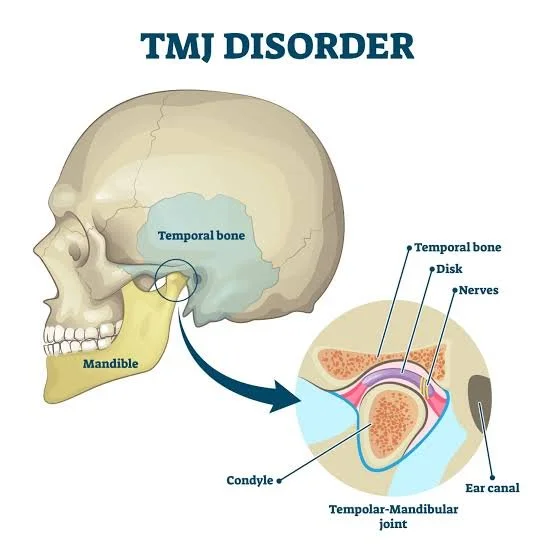
The temporomandibular joints (TMJs) are located just in front of each ear and connect your lower jaw, or mandible, to your skull.
These joints work together with muscles, ligaments and other structures to allow your jaw to open, close and move from side to side. You use them constantly throughout the day when speaking, chewing, swallowing and yawning.
Although people often refer to the condition as “TMJ” or “TMJ disorder,” TMJ technically refers to the joint itself. TMD, or temporomandibular disorder, is the broader term used for conditions affecting the jaw joint, the muscles responsible for jaw movement, or both.
TMD can therefore include a range of different problems rather than one specific condition. Identifying which structures are involved is an important part of determining the most appropriate treatment.
What Are the Symptoms of TMJ Disorder?
The symptoms of TMD vary considerably between patients. Some people experience pain, while others first notice clicking, stiffness or a change in the way their jaw moves.
Common symptoms can include:
Jaw pain or tenderness
Pain around or in front of the ear
Clicking or popping when opening the mouth
Difficulty opening the mouth fully
Jaw stiffness
A jaw that locks open or closed
Pain or discomfort while chewing
Tender or tired chewing muscles
Facial discomfort
Headaches associated with jaw or muscle tension
Neck or surrounding muscle tension
Not every clicking jaw requires treatment. Joint noises can occur without pain or significant dysfunction.
However, if jaw clicking is painful, your jaw regularly locks, you have difficulty opening your mouth, or symptoms are affecting your ability to eat comfortably, an assessment is recommended.
What Causes TMJ Disorder?
There is no single cause of TMJ disorder. TMD is often multifactorial, which means several factors may contribute to symptoms at the same time.
Understanding this is important because simply identifying one feature- such as a particular bite- does not necessarily explain why someone is experiencing jaw pain.
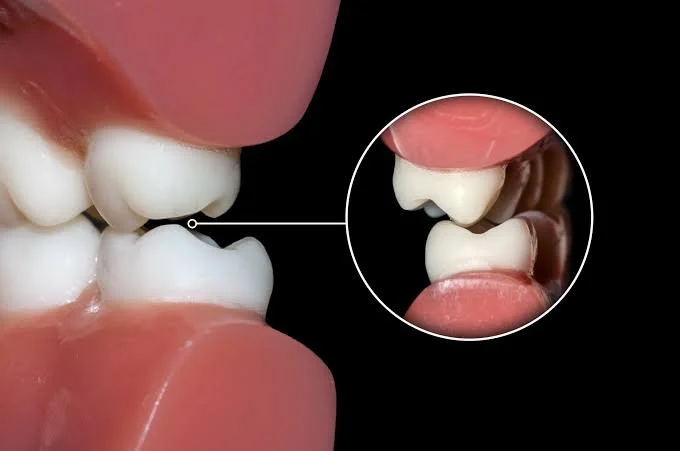
Teeth Grinding and clenching
Bruxism, or grinding and clenching your teeth, may contribute to jaw muscle discomfort in some patients.
Many people clench their teeth during periods of concentration or grind while sleeping without being aware of it. Repeated or prolonged muscle activity can leave the jaw muscles feeling tired, tense or painful.
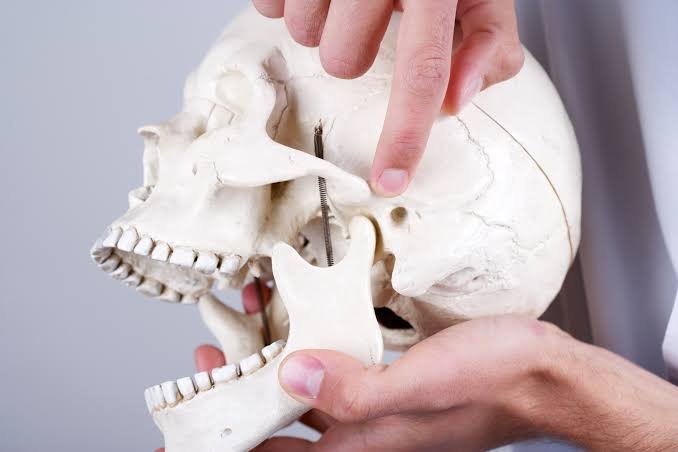
Problems within the jaw joint
Sometimes symptoms originate from structures within the temporomandibular joint itself.
The TMJ contains a small disc that helps the joint move smoothly. Changes in the position or function of this disc may sometimes be associated with clicking, locking or restricted jaw movement.
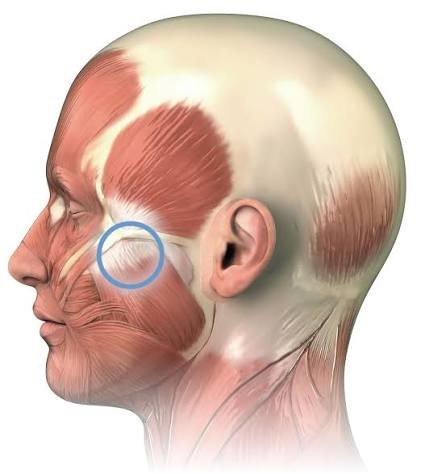
Muscle related problems
The muscles responsible for moving the jaw can themselves become a source of pain.
Muscle-related TMD may cause tenderness around the jaw and face, discomfort while chewing or difficulty opening the mouth comfortably.
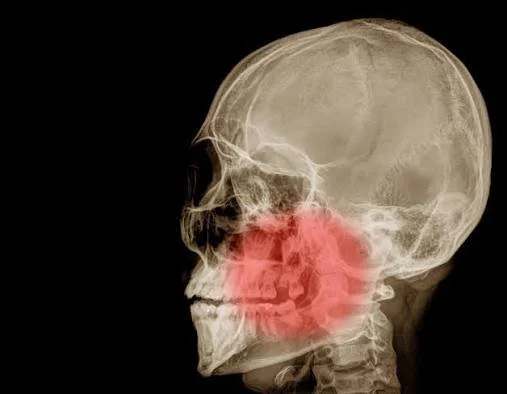
Injury or Trauma
An injury to the face, jaw or TMJ can sometimes lead to ongoing pain or altered jaw movement.
If symptoms begin following an accident, impact or other trauma, this information is particularly important during your assessment.
Can Your Bite Cause TMJ Problems?
This is one of the most common questions patients ask about TMJ disorder and orthodontics.
The relationship between the bite and TMD is complex. Jaw pain should not automatically be assumed to be caused by crooked teeth or bite misalignment, and orthodontic treatment is not a universal treatment for TMD.
However, assessing the bite can still form an important part of a comprehensive orthodontic examination.
An orthodontist can assess how your upper and lower teeth meet, how your jaw moves when you open and close your mouth, and whether there are orthodontic factors that need to be considered as part of the overall picture.
This helps us distinguish between problems that may fall within orthodontic care and symptoms that may require a different or multidisciplinary approach.
How Is TMJ Disorder Diagnosed?
There isn't one single test used to diagnose every case of TMD.
A TMJ assessment begins with a detailed discussion about your symptoms. This may include when the problem started, where you experience pain, what movements trigger discomfort and whether you have noticed clicking, locking or changes in jaw movement.
A clinical examination may then look at:
Your range of jaw movement
How comfortably you can open your mouth
Whether your jaw moves evenly
Areas of muscle tenderness
Pain around the temporomandibular joints
Clicking, popping or other joint sounds
Your teeth and bite where relevant
Signs of tooth wear or grinding
Depending on your symptoms and clinical findings, further investigation or referral may be recommended.
The purpose of a TMD assessment is not simply to label your symptoms as “TMJ”. It is to understand what may be contributing to your jaw pain or dysfunction so that the appropriate management can be recommended.
How Is TMJ Disorder Treated?
If you're wondering how to treat TMJ disorder, the answer depends on your individual diagnosis.
Because TMD can involve different joints, muscles and contributing factors, treatment should be personalised to the patient rather than applying the same solution to everyone.
Where possible, management generally begins with conservative approaches.
Managing Jaw Strain
For some patients, reducing unnecessary strain on painful muscles or joints may help while symptoms settle.
Depending on your individual condition, this might involve temporarily modifying activities or habits that aggravate your symptoms.
Managing Grinding and Clenching
If teeth grinding or clenching appears to be contributing to muscle discomfort, this may need to be considered as part of your treatment plan.
The appropriate approach depends on the individual, so an assessment should take place before treatment is recommended.
Physiotherapy and Other Care
Some patients with muscular or movement-related symptoms may benefit from physiotherapy or assessment by another appropriately qualified healthcare professional.
TMD can sometimes require input from several disciplines. Where symptoms fall outside the scope of orthodontic treatment, referral may form an important part of providing appropriate care.
Orthodontic Treatment
Orthodontic treatment may be appropriate where a patient has a separate orthodontic problem that requires correction.
However, braces or clear aligners should not be viewed as a general treatment for TMJ pain. Whether orthodontic treatment is appropriate depends on your individual bite, diagnosis and treatment needs.
Why TMD Treatment Is Personalised
Two patients experiencing similar jaw pain may have completely different underlying problems.
One person's symptoms may primarily involve the chewing muscles, while another may have a problem involving the joint itself. Someone else may have several contributing factors at the same time.
This is why TMD treatment should be personalised.
At Hugo Orthodontics, our role is to assess the orthodontic and bite-related aspects of your symptoms, understand how your jaw is functioning and determine the most appropriate next step.
In some cases, monitoring or conservative management may be appropriate. In others, collaboration with or referral to another healthcare professional may be recommended.
The aim is not to over-treat the problem. It is to understand it properly and help you access the care most appropriate to your symptoms.
When Should You Seek Help for TMJ Pain?
Occasional clicking or mild jaw discomfort doesn't necessarily mean something is seriously wrong.
However, you should consider having your jaw assessed if you experience:
Persistent or recurring jaw pain
Difficulty chewing because of discomfort
Painful clicking or popping
Limited mouth opening
A jaw that regularly locks
Significant changes in jaw movement
Symptoms that are progressively worsening
Jaw pain following an injury
Symptoms that interfere with eating or everyday activities
If you're unsure whether your symptoms require treatment, an assessment can help provide clarity.



TMJ & TMD Care at Hugo Orthodontics
At Hugo Orthodontics, we believe good treatment starts with a proper diagnosis.
Our specialist orthodontic team considers your teeth, bite and jaw function as part of a detailed assessment. Rather than assuming that every case of jaw pain is caused by the bite, we look at the broader clinical picture and determine whether orthodontic factors are relevant.
Where appropriate, we can recommend conservative management or orthodontic care. Where another form of treatment or expertise is required, we can advise on the appropriate next step.
If you are experiencing TMJ pain, jaw clicking, jaw locking or difficulty opening your mouth, a consultation is an opportunity to better understand your symptoms and determine how they should be managed.
FAQ:
-
TMJ disorder is a commonly used term for temporomandibular disorder (TMD). TMD refers to a group of conditions affecting the temporomandibular joints, jaw muscles and surrounding structures. Symptoms may include jaw pain, clicking, locking, stiffness and difficulty opening the mouth.
-
TMJ stands for temporomandibular joint, which is the joint connecting the lower jaw to the skull. TMD stands for temporomandibular disorder and describes conditions affecting this joint, the surrounding muscles or both.
-
Common TMJ symptoms include jaw pain, facial discomfort, clicking or popping, pain when chewing, limited mouth opening, jaw locking and muscle tenderness. Symptoms can vary significantly between patients.
-
Jaw clicking can occur when structures within the TMJ move during opening and closing. Clicking without pain or restricted movement does not always require treatment. However, painful clicking, locking or difficulty opening the mouth should be professionally assessed.
-
TMD can be associated with headaches in some patients, particularly when jaw-muscle tension is involved. Headaches have many potential causes, however, so they should not automatically be attributed to the TMJ.
-
Because the temporomandibular joints are located close to the ears, some patients with TMD report discomfort around the ear. Ear pain can have many other causes, so an appropriate medical or dental assessment may be necessary.
-
Teeth grinding and clenching can contribute to jaw-muscle pain or fatigue in some patients. If bruxism is suspected, your clinician can consider this alongside your other symptoms when determining an appropriate management plan.
-
Not necessarily. Clicking and popping are relatively common and may occur without pain or significant dysfunction. Clicking accompanied by pain, locking or restricted movement is more reason to seek an assessment.
-
A specialist orthodontist can assess your bite, teeth and jaw movement and identify orthodontic factors that may be relevant to your symptoms. Depending on the findings, additional investigation or referral to another healthcare professional may be recommended.
-
Braces are not a universal treatment for TMD. Orthodontic treatment may be recommended when there is a separate orthodontic problem requiring correction, but jaw pain should be properly assessed rather than assuming braces will resolve it.
-
Clear aligners are primarily used to move teeth and correct appropriate orthodontic problems. They should not be considered a general treatment for TMJ pain. Whether orthodontic treatment is appropriate depends on your diagnosis and individual needs.
-
Some mild TMD symptoms can improve over time, while others persist or recur. If you experience ongoing pain, locking, difficulty chewing or restricted jaw movement, professional assessment is recommended.
-
TMD treatment depends on the cause and severity of symptoms. Conservative management is generally preferred where appropriate and may involve managing aggravating habits, addressing muscle-related factors or referral for physiotherapy or other professional care.
-
If you are looking for a TMJ assessment in Johannesburg, a specialist orthodontic assessment can examine your teeth, bite and jaw movement and determine whether orthodontic factors are relevant. Where necessary, referral for further TMD assessment or management may be recommended.
-
TMJ treatment costs in Johannesburg vary depending on the cause of your symptoms, investigations required and recommended management. Because TMD differs significantly between patients, an assessment is required before an accurate treatment plan and associated costs can be discussed.
Follow Our Socials: